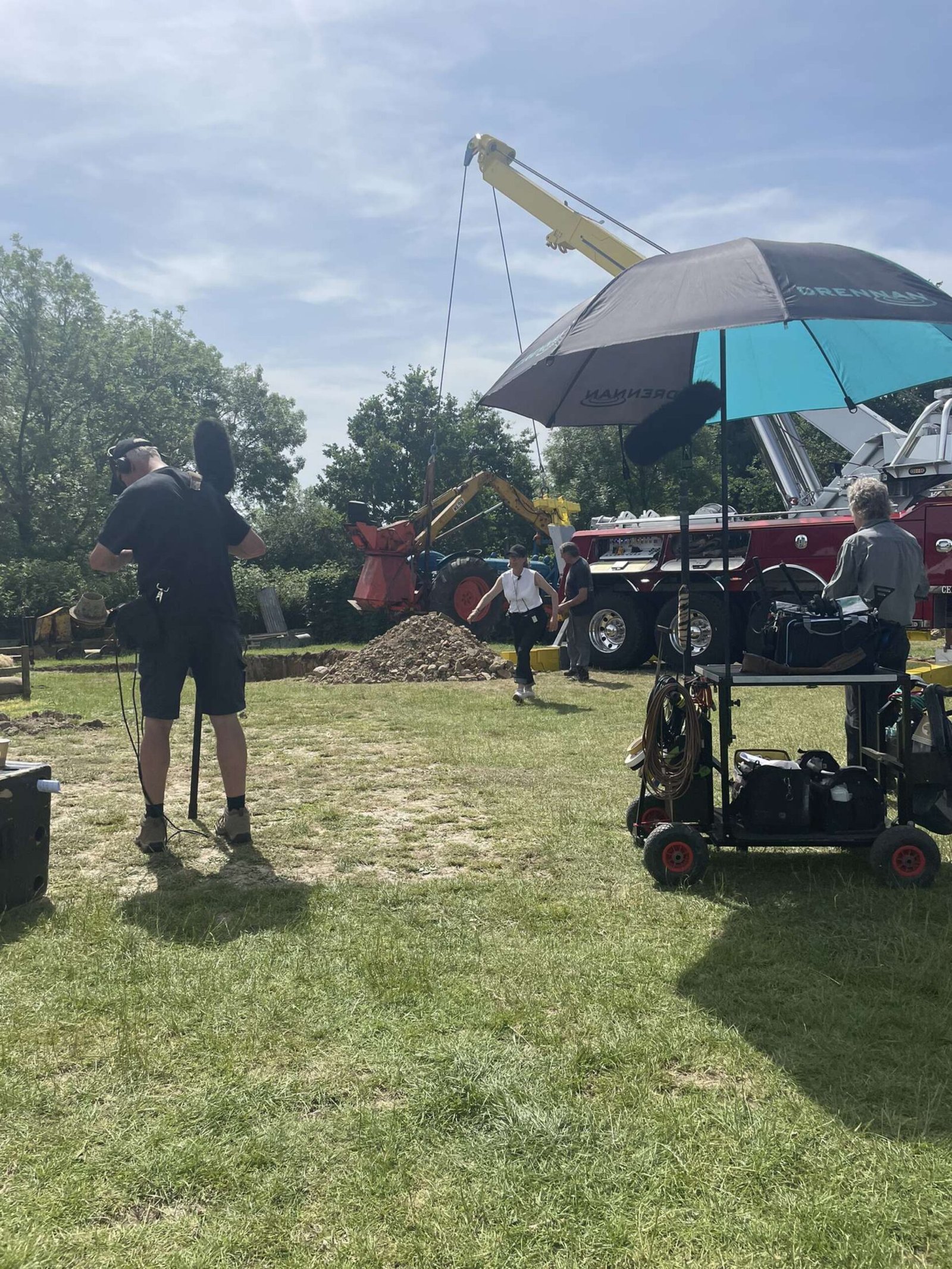
Every production carries risk. Long days, heavy kit, vehicles, weather and public locations all add up, and when someone gets hurt the quality of your first aid planning decides how quickly they get help.
This guide walks through how we plan emergency first aid and medical cover for film and TV productions, and what you should have in place before the first day of filming.
1. Start with a production risk assessment
Medical cover should follow the risks, not the other way round. Before booking anyone, list what is actually happening on each shooting day: locations, crew numbers, call times, vehicles, stunts, special effects, water, height and any work with children.
Under the Health and Safety (First-Aid) Regulations 1981, employers must provide adequate and appropriate first aid for their people. On a production, what counts as adequate depends on that risk picture, which is why one fixed answer rarely works across a whole schedule.
2. Choose the right level of cover
Different days need different people. A quiet interview day and a night shoot with a car stunt are not the same job.
- Trained first aiders within the crew suit low-risk days with good access to emergency services.
- A dedicated unit medic suits most shooting days, giving one person whose only job is the health of cast and crew.
- Paramedics, nurses or doctors suit higher-risk days, remote locations and large crowds.
- Specialist teams such as water safety and rope rescue are needed when the scene itself is the hazard.
Book cover day by day against the schedule, not once for the whole production. It is safer and usually better value.
3. Build an emergency plan for every location
A medic on set is only half of it. Every location needs a written plan that anyone on the crew can follow.
- Nearest A&E and nearest major trauma centre, with drive times
- Exact access point for an ambulance, with a postcode and a precise location reference
- Who calls 999, and who meets the ambulance at the gate
- Where the medic and kit are based on set
- How to reach the medic on radio or phone
- Plan for remote locations with weak mobile signal
4. Look after welfare on long days
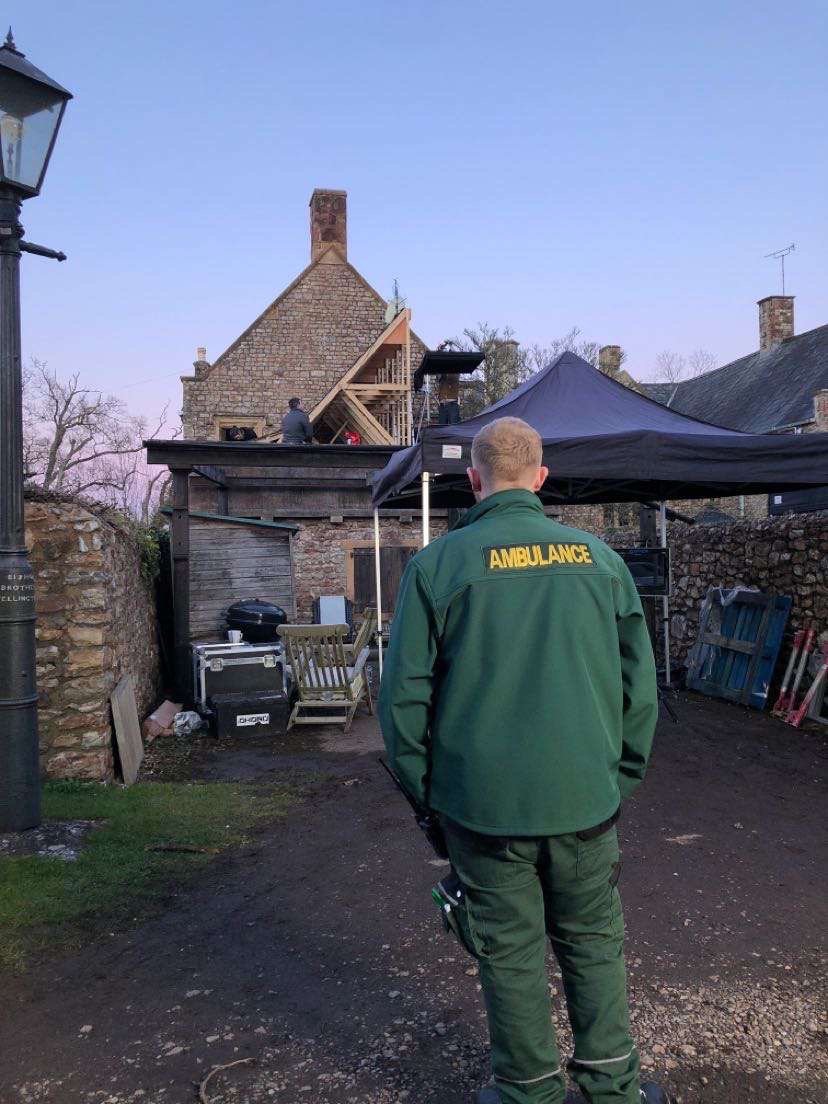
Most incidents on set are not dramatic. They are cuts, sprains, heat, cold, dehydration and fatigue, especially late in a long day. A good unit medic checks in with departments, watches for early signs and stops small problems turning into lost time.
Plan for the weather, make sure water and rest areas are available, and take extra care on night shoots and turnarounds.
5. Plan for higher-risk scenes
Water
Any scene in or near water needs rescue capability in position before cameras roll, not just a medic on the bank. See how we handled a night-time cold water stunt.
Height and stunts
Work at height and stunts need a written rescue plan agreed with the stunt coordinator and riggers. Our cliff-edge case study shows what that looks like.
Children
Child performers need medics who understand paediatric care and safeguarding, and who are confident to escalate early.
Frequently asked questions
Do we legally need a medic on set?
The law requires adequate first aid provision based on your risks. For many shoots that means a dedicated medic; for higher-risk work it is essential. Your risk assessment should decide.
How far in advance should we book medical cover?
As soon as your schedule and locations are confirmed, so the medic can be included in your risk assessments and location plans.